
Water Damage Restoration in South Florida
A burst supply line at 2 a.m. in a Coral Gables condo. King-tide water creeping under a Miami Beach front door. Storm surge wrecking a Hollywood townhome before the wind even dies. Water damage in South Florida moves fast — and so do we. Our IICRC-certified crews extract standing water, set industrial drying equipment, and document every reading for your insurance carrier, with sub-60-minute response from Boca Raton to Homestead.

Common Causes of South Florida Water Damage
- ›Burst or leaking supply lines (especially older copper plumbing in pre-1980s coastal high-rises)
- ›Hurricane storm surge and tidal flooding (storm season runs June through November)
- ›King tide and street flooding in Miami Beach, Hollywood, and along Las Olas
- ›Failed AC condensate drain lines — year-round Florida heat means year-round AC means year-round risk
- ›Water heater failures and supply-line ruptures
- ›Sewer line backups in older Broward County neighborhoods
- ›Roof leaks during heavy rain and tropical storms
Our Water Damage Process
- ›Emergency response and water source control
- ›Standing-water extraction with truck-mounted units
- ›Moisture mapping using infrared cameras and pinless meters
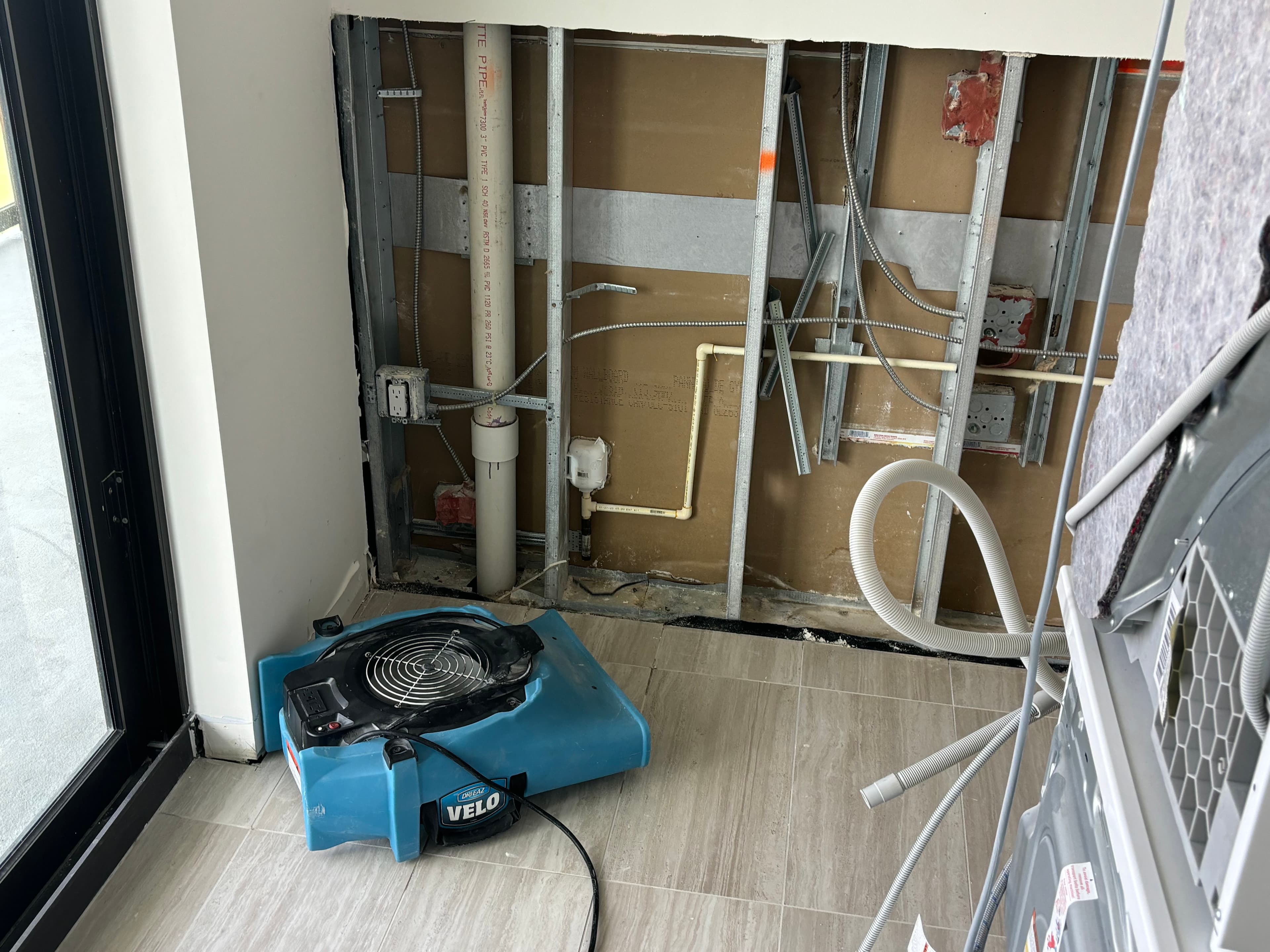
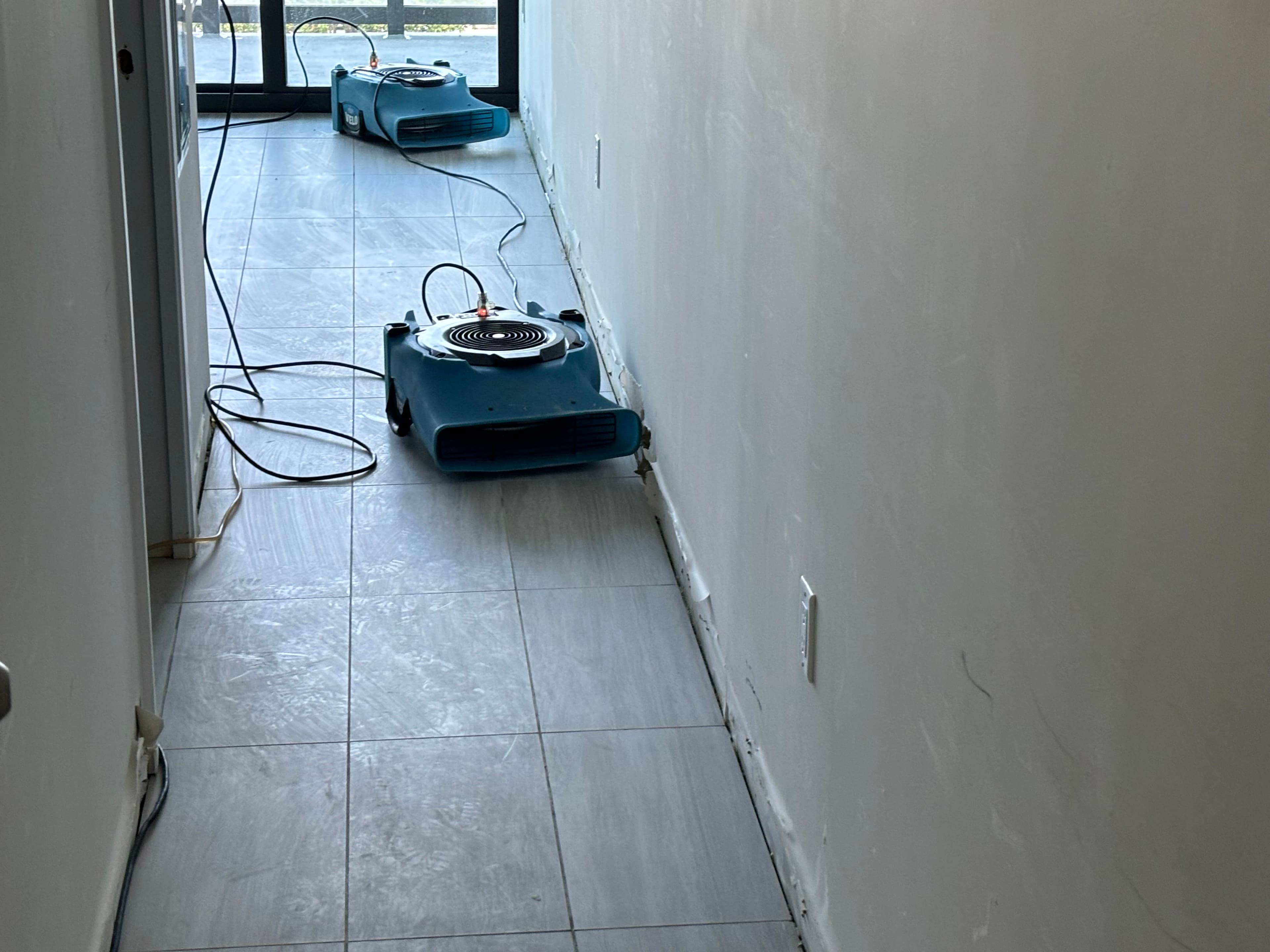
- ›Industrial drying with air movers, LGRs, and refrigerant dehumidifiers
- ›Containment and antimicrobial treatment to prevent mold colonization
- ›Daily monitoring with documented dryness logs
- ›Final inspection, clearance documentation, and insurance reporting
Why South Florida Water Damage Is Different
South Florida humidity changes the math on water damage. In drier climates a flooded room can air-dry over a few days; here, ambient humidity sits between 70% and 90% most of the year, evaporation slows to a crawl, and mold colonies start forming inside cavity walls and under flooring within 24 to 48 hours. Drying equipment has to be sized correctly for both the volume of moisture and the local dew point — the same setup that works in Atlanta won't pull water out of a Hollywood living room on schedule.
Hurricane season multiplies the urgency. A single storm can saturate hundreds of properties at once, and restoration crews fill up fast. The carrier paperwork is also unique to Florida: Citizens Property Insurance, Heritage, Universal North America, and a handful of state-specific carriers each have their own documentation expectations. We photograph every affected room, log moisture readings room-by-room over multiple days, and submit the kind of evidence package your adjuster needs to approve the claim without bouncing it back.
Coastal high-rises in Miami Beach, Aventura, Sunny Isles, and downtown Fort Lauderdale add a layer most other markets don't deal with. Shared plumbing risers mean a leak in one unit can soak three units below within minutes. Condo association rules dictate which contractors can work in the building, what hours equipment can run, and who's financially responsible for what — drywall versus pipe, common element versus unit owner. We've worked enough of these buildings to know how to coordinate with property management without the job stalling out.

Frequently Asked Questions
How quickly does mold start in Florida humidity?
Mold spores can begin to colonize damp materials within 24 to 48 hours in South Florida's typical 70–90% humidity range. The faster water is extracted and structural drying is started, the less likely you'll be paying for mold remediation on top of water mitigation. That's why our standard response time on emergencies is under 60 minutes.
Will my Florida insurance cover hurricane water damage?
It depends on the source. Wind-driven rain that enters through a damaged roof is usually covered under your standard homeowners or condo policy. Rising water from storm surge is typically excluded under HO-3 and HO-A policies and falls under separate flood insurance (NFIP or private). We document both wind-driven and flood causation thoroughly so your adjuster can apply the right coverage — and when those lines blur, our reports help support disputes.
Do I need to leave my home during drying?
Most water mitigation jobs let you stay in the home, but drying equipment is loud and rooms with active equipment shouldn't be slept in. Significant Category 3 (sewage) losses, large mold finds, or jobs requiring contents pack-out usually mean temporary relocation. Many homeowners' policies in Florida include 'loss of use' coverage that pays for hotel or short-term rental stays — we'll help you file for it.
How long does South Florida water damage drying typically take?
Most residential jobs run 3 to 5 days from extraction to dry. Hardwood floors and dense materials in coastal humidity can take longer — sometimes up to 7 days — and we monitor moisture readings daily so the equipment runs only as long as it needs to. If we pull early we risk hidden moisture and downstream mold; we keep documentation throughout so your carrier sees why each day was billed.
Serving South Florida from Boca Raton through Fort Lauderdale to Miami and Homestead — including Boca Raton, Deerfield Beach, Pompano Beach, Fort Lauderdale, Hollywood, Hallandale Beach, and surrounding communities.
See full Service Areas →Need Help Now?
24/7 emergency response across South Florida.
Call (754) 777-8956Request Help